
Bali field guide
Best Fruits to Try in Bali: How to Choose Ripe Fruit
Mangosteen, mango, salak, rambutan, passion fruit, dragon fruit, papaya, soursop and durian: photos, ripeness checks you can do at the stall, what a kilo should cost and when each fruit is in season.
Published 2026-09-24
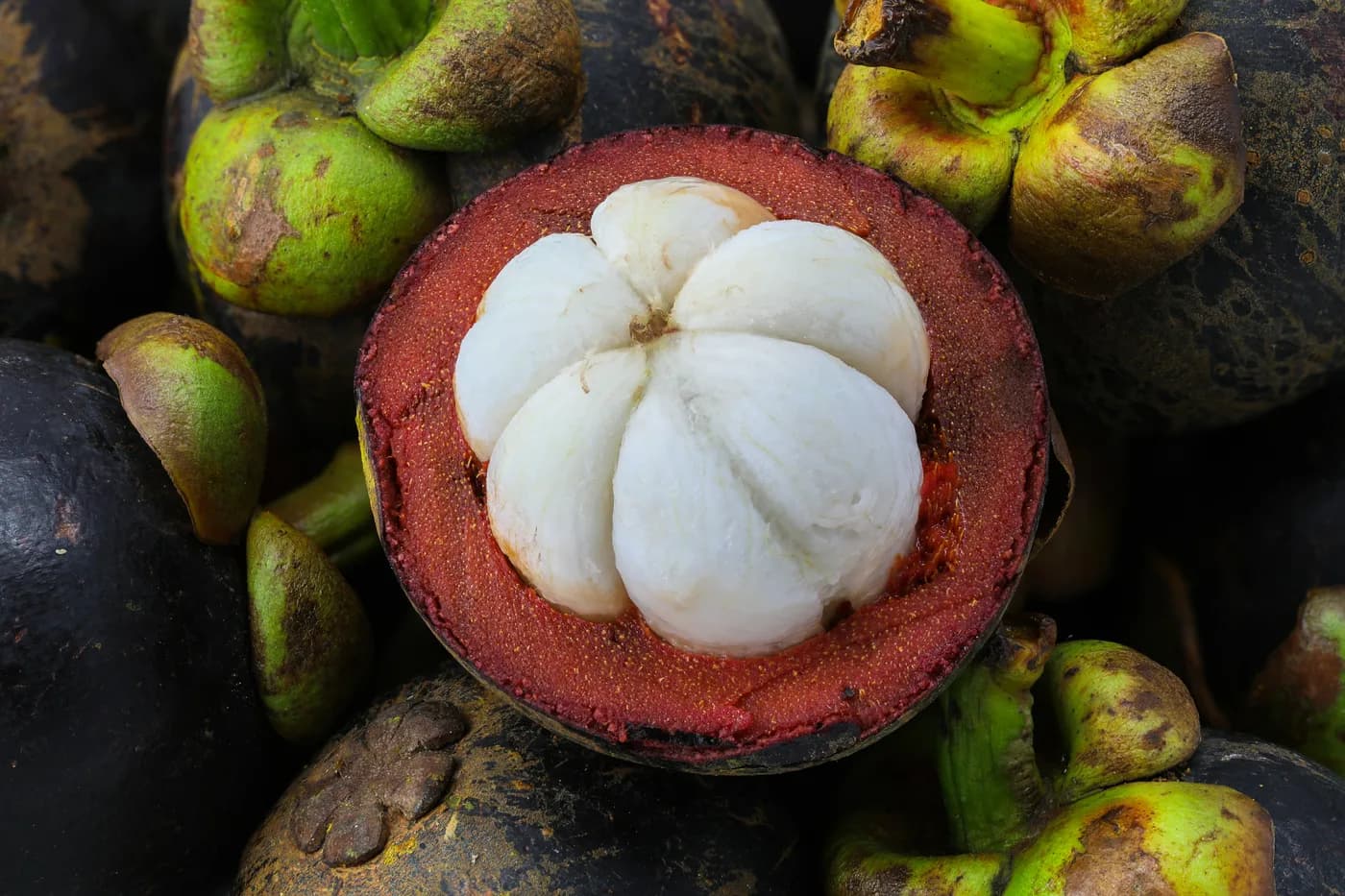
Basile Morin · CC BY-SA 4.0Reference photo; resized for this guide. It does not show today’s produce or conditions.

The useful part, first
Each fruit has its own ripeness tell, and none of them is colour: learn the three or four you actually want to eat, and check the base, the tip or the give before you pay.
In this guide
Make it your plan
Meet your next favourite fruit
Choose a fruit to see what it looks like, how to pick it and how to eat it.
Basile Morin · CC BY-SA 4.0Reference photo; resized for this guide. It does not show today’s produce or conditions.
Ask for: manggis
Mangosteen
- The flavour
- Juicy, delicate, sweet-tart.
- How to choose
- Dark purple skin that yields like a ripe avocado; wooden-hard means dried out inside. Count the lobes on the base rosette: that is how many segments are in there.
- How to eat
- Break the shell gently and eat the white segments, leaving any large seeds.
Bali
Find your place
Choose an area or place. Open the map for directions and recent details.
Pasar Semat Sari
A neighbourhood produce stop. Confirm current trading hours before going.
Open in Google MapsIf the map does not load, use the direct link. Check access and hours before travelling.
01
Build a small first tasting
Start with mangosteen, mango and salak: delicate juicy segments, soft aromatic flesh and a crisp fruit with snake-like skin. Add papaya or dragon fruit for a mild breakfast, and passion fruit for acidity. Try a few rambutans at a time and make durian a separate small experiment.
These are fruits you may find in Bali, not plants exclusive to the island. Availability and flavour vary with season, variety and supply. Buy a small tasting portion before taking a kilogram of everything.
02
Mango: feel matters more than a red blush
A ripe mango usually yields slightly to gentle pressure. Red colour is not a reliable ripeness signal because varieties differ. For eating today, ask for an aromatic fruit with a little give, without wet collapsed areas or damage. If buying for juice, ask about sweetness; green mango is also eaten, but offers a different, tart experience.
03
Mangosteen: purple skin and delicate white segments
Ripe mangosteen has reddish-purple to dark purple skin that gives slightly under your thumb, roughly like a ripe avocado. A fruit that feels wooden-hard has usually dried out inside, and the flesh will be brown and rubbery however perfect the outside looks.
Turn it over before you buy. The small flower-shaped rosette at the base has between four and eight lobes, and that count matches the number of white segments inside, so you can pick the fruit with the most flesh without opening it. Ask to open one from the batch anyway, and keep the rind juice off light clothing, because it stains permanently.
04
Salak: the crisp snake fruit
Ask for Salak Gula Pasir, the caster-sugar variety from Karangasem. It is the sweet one, with little of the astringency that puts people off their first salak, and it costs slightly more for good reason.
The scales should look glossy and sit tight against the fruit; if they rub off as dry dust, it has been on the table too long. Press the pointed tip, which should be firm. Softness there, or a sour cidery smell, means fermentation has already started. Peel from the tip, separate the pale segments and leave the hard seed.
05
Rambutan: hairy skin, juicy flesh
Rambutan is normally harvested ripe, so do not buy an immature sour batch expecting windowsill ripening to fix it. Choose fresh-looking fruit without wet damage; colour varies by variety and drying hairs do not tell the whole story. Break the shell and eat the flesh, leaving the seed.
06
Wrinkles are a clue, not a verdict
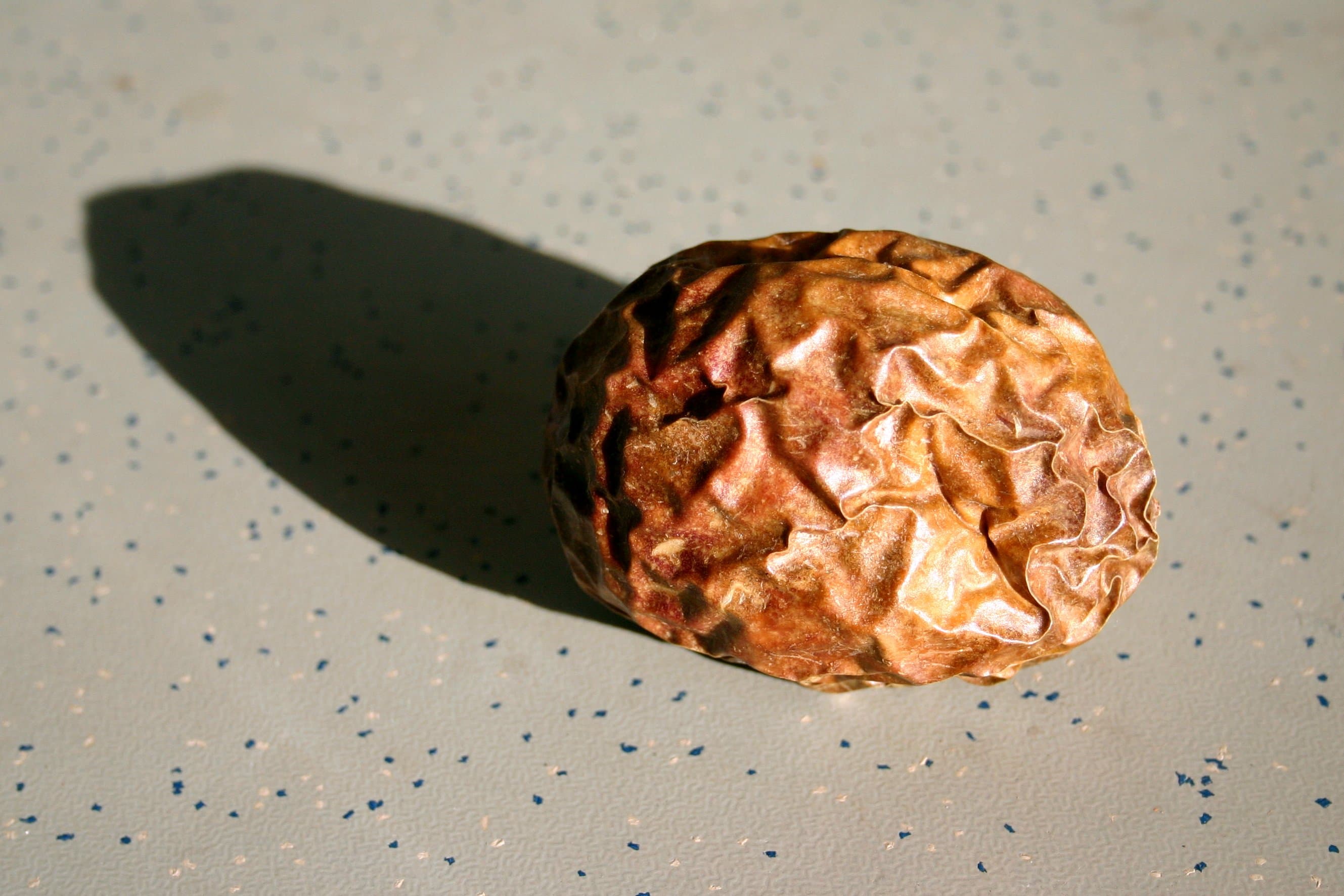
For edible passion fruit, wrinkling can be a welcome sign: the RHS recommends allowing the skin to wrinkle for the sweetest flavour. But the skin alone cannot tell you whether a particular fruit is delicious. Check its weight and condition too; a very light, shrivelled fruit may have lost too much moisture.

07
Dragon fruit and papaya: an easy breakfast
Dragon fruit, or buah naga, can have white or brightly coloured flesh. Choose intact skin without leaks or large bruises and ask the seller which flesh colour is inside. Red flesh is not a guarantee of sweetness: taste the variety. Halve it and scoop out the flesh or peel it.
For papaya, ask for California, the medium-sized cultivar sold across the island and the sweeter, less watery of the two you will meet. Ripe skin is an even orange-yellow with no green collar left around the stem, and the flesh springs back when pressed rather than denting. Halve it lengthwise, remove the seeds and scoop out the flesh. External cues never replace checking the inside after cutting.
08
Durian: try a small portion where it is sold
Durian has creamy flesh and a powerful aroma. For a first taste, ask the seller to open the fruit in front of you and start small; judging ripeness just by tapping is unreliable for a beginner. Before buying a whole fruit, check your hotel and transport rules, as the smell may be restricted.
09
Soursop: the one people walk past
Sirsak, or soursop, is the spiky green fruit that manages to look unripe for its entire life. It is ready when it gives all over like a soft pear and the spines have darkened and snap off at a touch. A rock-hard one bought in the morning is usually edible by the following evening if you leave it on the counter rather than in the fridge.
The flesh is white, fibrous and sharply citric, which is why most people meet it as juice with a little sugar rather than eaten with a spoon. Cut around the black seeds, which are not eaten.
10
What fruit should actually cost
Two prices run side by side on this island. At a traditional market, the everyday fruits — papaya, banana, dragon fruit, salak, mango in season — generally sit around 20,000 to 35,000 IDR per kilo. The same kilo in an expatriate supermarket such as Pepito or Grand Lucky is closer to 45,000 to 70,000, because it has been sorted, chilled, packed and put somewhere with air conditioning.
Mangosteen and durian sit outside that band and swing hardest with the season; out of season, mangosteen can double. Treat these as orientation rather than a price list, because they move week to week. Their real use is recognising the opposite case: a stall quoting four times the number is quoting a tourist price, which is better to know before you start bargaining than after.
11
When each fruit is actually in season
Bali sells something all year, but the fruit you arrived hoping for has a window. Mango runs roughly October to January, mangosteen December to March, rambutan December to February, and durian December to March with a smaller second flush around the middle of the year. Salak, papaya, dragon fruit, banana and pineapple are effectively year-round, which is why every stall has them.
Out of season, what you are looking at is imported, cold-stored or the tail end of a local crop: it costs more and tastes less. A beautiful pile of mangosteen in August is a question worth asking rather than a bargain worth taking.
12
What to ask and how to store it
“Untuk dimakan hari ini” means for eating today. “Manis atau asam?” means sweet or sour? These are more useful than asking for the prettiest fruit. Compare the weight of similar-sized fruits and avoid mould, leakage and unpleasant fermented smells. Do not apply the wrinkled-passion-fruit rule to every other fruit.
Wash the outside with safe water before cutting and use a clean knife. Refrigerate cut fruit rather than leaving it in the sun. The companion market guide helps you choose both the fruit and the shopping stop.
Before you go
Your checklist
Tick off what you have checked. Progress stays in this browser.
0/5 checked